
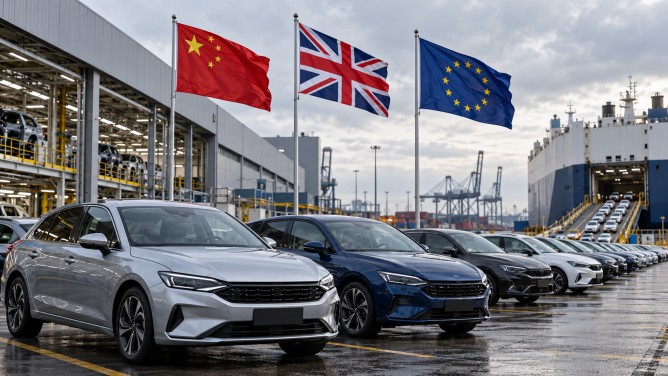
Britain’s car industry is at a crossroads as it weighs trade policy decisions between China and the European Union. The UK is under pressure to impose tariffs on Chinese vehicle imports, a move that could increase consumer prices and deter Chinese investment. Currently, the UK does not have tariffs specifically targeting Chinese vehicles, while the European Union imposes duties of up to 45% on Chinese electric vehicles.
Industry leaders caution that aligning too closely with China could jeopardize the UK’s access to the European market, which remains the largest export destination for British cars. In the first half of the year, the EU accounted for around 58% of the UK’s car exports. Despite this, Chinese brands like BYD, Omoda, and Jaecoo are gaining ground in the UK market, with their combined share of new car sales reaching about 12% in the first eight months of 2026, driven by demand for cost-effective electric and hybrid vehicles.
The debate over trade strategies has intensified as European policymakers mull over additional measures to curb the influence of Chinese vehicle imports. UK manufacturers, heavily reliant on the European market, find themselves in a precarious position. The industry is calling for clearer guidance from the government on its long-term trade strategy, as decisions made now could have lasting impacts on the local automotive sector.
Chinese investments could bolster UK manufacturing and provide affordable vehicle options for consumers, yet the risk of EU-imposed restrictions threatens the stability of British car exports and suppliers. Industry representatives stress the importance of balancing these trade relationships to safeguard the future of the UK’s car industry.