
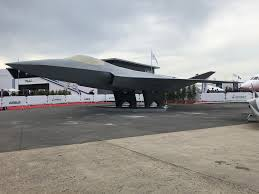
Europe’s ambition to build a sixth-generation fighter jet is facing a major setback due to escalating disagreements between two of its leading aerospace companies. The Future Combat Air System (SCAF), jointly managed by France and Germany, has been thrown into uncertainty as tensions worsen between Dassault Aviation and Airbus’s German division over leadership and control of the project.
Safran chief executive Olivier Andriès confirmed that cooperation between these industrial giants is now “very strained,” raising concerns that the programme could be derailed. Despite this friction, Andriès emphasised that political support for the initiative remains robust. Both French President Emmanuel Macron and German Chancellor Friedrich Merz reportedly want to protect the project, recognising its strategic importance for Europe’s defence autonomy. Still, Andriès admitted he could not say whether the dispute had reached a point of no return.
The Scaf fighter is designed to be Europe’s answer to the next generation of combat aviation, integrating stealth technology, drone collaboration and advanced electronic warfare capabilities. If successful, it would be unveiled alongside rival projects such as the UK-Italy-Japan Global Combat Air Programme and Boeing’s anticipated F-47 fighter. However, industry observers warn that Europe risks duplicating efforts—and losing competitive ground—if partners fail to unite behind a single vision.
In contrast to the broader discord, some elements of the programme are progressing smoothly. Safran and Germany’s MTU Engines have completed key agreements on engine development responsibilities. Meanwhile, Safran is also lobbying the UK government as part of its separate investments in electric propulsion and rare-earth-free technologies, a response to increasingly weaponised global supply chains. Without urgent compromise between Dassault and Airbus, analysts fear Europe’s most ambitious military aviation project could stall before it ever leaves the runway.