
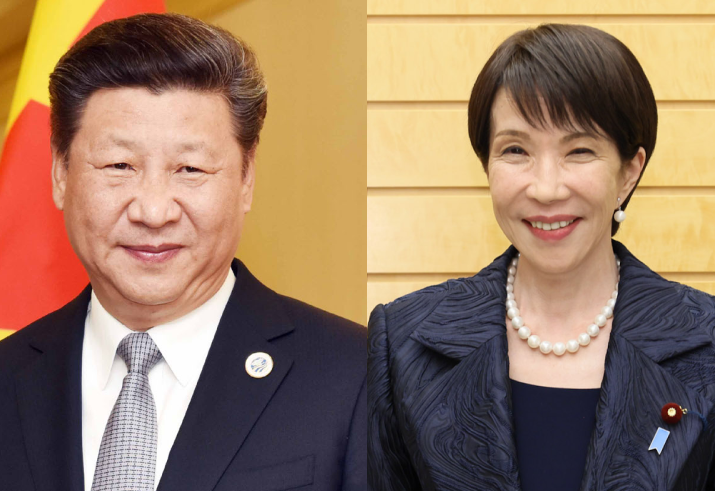
Prime Minister Sanae Takaichi’s experience demonstrates that discussing hypothetical scenarios in international relations can prove diplomatically consequential regardless of intentions or framing, as statements about potential future situations create political facts that constrain diplomatic options and trigger real-world responses. Takaichi’s explanation that she “didn’t intend to mention any specifics” and was “answering sincerely” to hypothetical questions has done nothing to mitigate Chinese concerns or prevent substantial economic consequences from materializing across multiple sectors.
The lesson reflects fundamental aspects of international communication where the distinction between hypothetical discussion and policy commitment may be clearer to speakers than to audiences, particularly when those audiences have strategic interests in interpreting statements maximally. From China’s perspective, Takaichi’s willingness to publicly discuss Japanese military involvement in Taiwan scenarios represents a significant shift regardless of whether she framed it as hypothetical or contingent on specific circumstances.
The economic consequences of this hypothetical discussion are substantial and entirely real. Travel advisories threaten tourism losses of approximately $11.5 billion, with over 8 million Chinese visitors in the first ten months of this year representing 23% of all arrivals to Japan. Cultural exchanges have been disrupted, there are concerns about rare earth export restrictions, and existing trade barriers like the seafood import ban continue. Small businesses throughout Japan are experiencing immediate impacts with mass cancellations extending months into the future.
The pattern suggests that international relations operate under different communication norms than domestic policy discussions, where hypothetical scenario planning is routine. In bilateral relationships where fundamental disagreements exist over sensitive issues like Taiwan, even hypothetical discussions can be interpreted as revealing underlying intentions, testing boundaries, or signaling policy evolution. Chinese foreign ministry spokeswoman Mao Ning’s demands that Japan retract statements indicate Beijing views the hypothetical nature of Takaichi’s remarks as diplomatically irrelevant.
For future leaders, the lesson may be that hypothetical scenario discussions involving sensitive issues carry the same diplomatic consequences as explicit policy statements, requiring similar caution and strategic calculation. International relations expert Sheila A. Smith notes that domestic political constraints in both countries make compromise difficult, while Professor Liu Jiangyong indicates China will implement countermeasures gradually. The crisis stemming from Takaichi’s hypothetical responses suggests that the boundary between scenario discussion and policy commitment is more porous in international diplomacy than in domestic contexts, with substantial economic costs resulting from statements framed as hypothetical that audiences interpret as revealing or consequential regardless of speaker intent, highlighting the challenges of managing sensitive diplomatic issues in environments where even contingent statements about potential future scenarios can trigger immediate real-world economic and political consequences.