
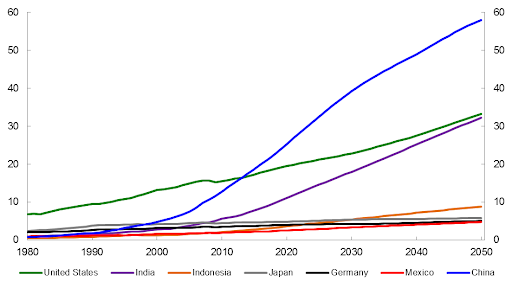
China has achieved one of the most significant poverty-reduction feats in modern history, moving nearly one billion citizens who lived on less than $3 a day in 1990 to zero by 2019. This massive economic transformation has set a new global benchmark for developing nations and fundamentally reshaped the narrative of modern development.
Meanwhile, the United States, despite its immense wealth, is moving in the opposite direction. Today, over four million Americans survive on less than $3 a day, a number that is three times higher than it was 35 years ago. This troubling increase highlights that American poverty is not a lack of resources, but a result of systemic political and economic choices.
The US maintains world-leading productivity and economic output, yet these gains are overwhelmingly concentrated at the top. Policy choices, including tax laws and cuts to safety nets, have disproportionately favored the wealthy, causing inequality to deepen across decades of bipartisan leadership and frustrating those at the bottom of the income ladder.