
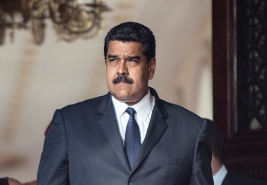
Venezuela’s vice-president has emerged as a key figure maintaining government continuity following the capture of President Nicolás Maduro by United States forces. The Saturday military operation removed the top leader but left much of the government apparatus intact, raising questions about whether regime change has actually occurred.
Security analysts note that civilian members of Maduro’s entourage remain in positions of authority, suggesting the political system may prove more resilient than the Trump administration anticipated. Dr. Carlos Solar from RUSI emphasized that the regime appears to be alive despite losing its president, with established power structures continuing to function.
The situation parallels Venezuela’s experience when Hugo Chávez died and Maduro succeeded him, with the Chavista movement adapting to new leadership rather than collapsing. This historical pattern suggests that removing one leader through external military force may not fundamentally transform the country’s political system.
US Attorney General Pam Bondi has announced that Maduro and his wife Cilia Flores will face drug trafficking charges in New York, with Secretary of State Marco Rubio confirming the charges relate to narcotics operations. President Trump stated the couple is currently aboard a ship being transported to the United States for prosecution.
The international community has responded with widespread condemnation, with UN Secretary General António Guterres warning of dangerous precedents. Major powers including China, Russia, and European nations have criticized the operation as violating sovereignty, while Latin American responses have split along ideological lines with Colombia mobilizing its armed forces in anticipation of potential refugee flows.