
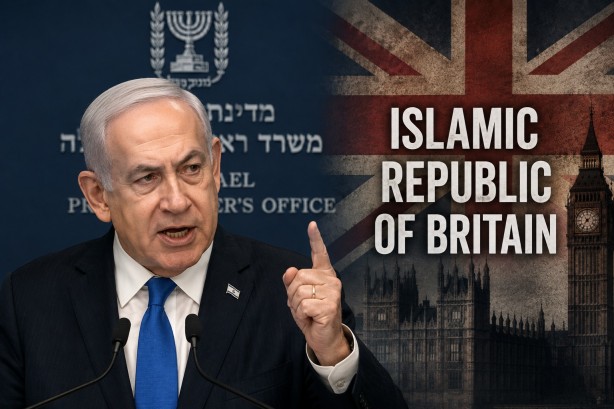
Israeli Prime Minister Benjamin Netanyahu has sparked controversy with remarks made during a podcast interview with Israel’s army radio, where he referred to the United Kingdom as the “Islamic republic of Britain” and labeled it as the “first Islamic republic to get a nuclear weapon.” This statement has drawn criticism from both British officials and Israeli political opponents, who view it as perpetuating Islamophobic stereotypes about Britain’s Muslim community. Netanyahu’s comments came while he was discussing the evolving political climate in Britain and praising journalist Randolph Churchill, son of former British Prime Minister Winston Churchill, for his favorable coverage of Israel.
The backlash against Netanyahu’s statements is set against the backdrop of strained relations between Britain and Israel, exacerbated by disputes over Israel’s military actions in Gaza and the UK government’s increasing criticism of Israeli policies. British Prime Minister Andy Burnham has previously indicated that the UK is considering escalating pressure on Israel, potentially through additional sanctions and trade restrictions related to illegal settlements. These developments highlight the growing diplomatic tensions between the two nations.
Netanyahu’s remarks have not only ruffled feathers in Britain but have also drawn ire from within Israel. Avi Dabush, an Israeli opposition politician, accused Netanyahu of jeopardizing Israel’s relationship with a vital international ally at a time when the country is experiencing increasing diplomatic isolation. This internal criticism reflects concerns over the potential long-term impacts of such statements on Israel’s foreign relations.
The British Foreign, Commonwealth and Development Office has condemned Netanyahu’s comments as “completely unacceptable” and confirmed that the issue has been formally addressed with the Israeli government. The incident comes amid rising tensions between Israel and several Western allies over the ongoing conflict in Gaza, as well as intensified debates over Islamophobia and anti-Muslim rhetoric in Britain. These dynamics underscore the broader challenges facing international diplomacy in the region.